By Analyst Team · Updated 2026-08-06 · 14 min read
Why Most IPTV Buyers End Up Frustrated — and How Not to Be One
When people search "how does IPTV work," they're usually already thinking about buying a subscription. Most jump in after seeing a slick promo video or a Reddit post showing thousands of channels for $15/month. Then reality hits: the EPG is empty, the live sports stream freezes at the worst possible moment, or the provider disappears after three months.
What causes that disappointment? Almost always the same thing — a lack of technical understanding before making a purchase. IPTV isn't magic. It streams video over your internet connection using protocols like HLS (HTTP Live Streaming) and MPEG-DASH. The quality you get depends less on how many channels are in the list and much more on server capacity, bandwidth allocation, CDN proximity to you, and the app you're using.
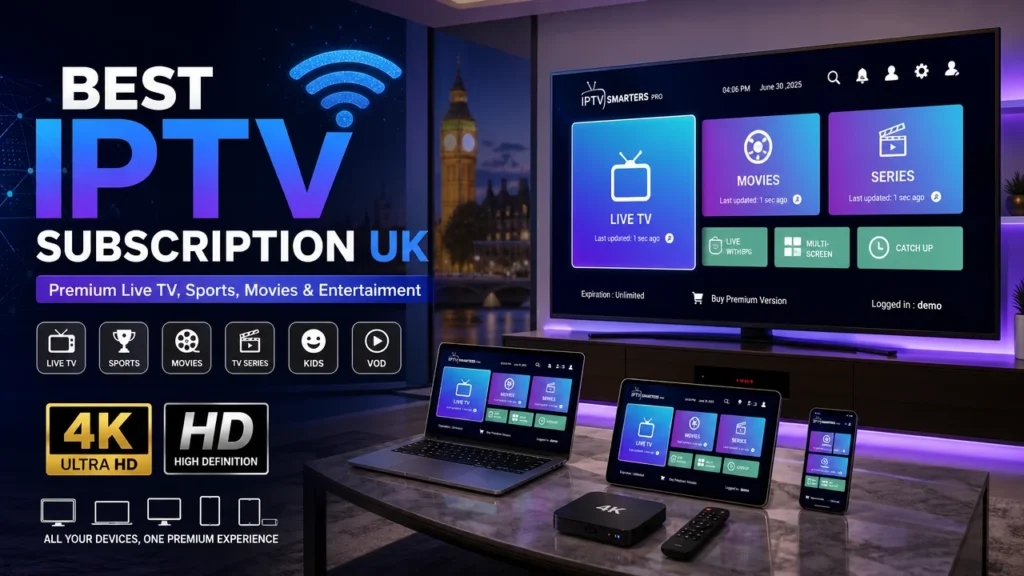
The image above shows exactly how an IPTV setup should look in a real household: a smart TV, active internet connection, and content delivered as data packets rather than broadcast signals. If you can visualize that flow, you're already ahead of 80% of people who buy the wrong service.
Get the vetted IPTV shortlist that actually performs during big events.
Explore tested plans →LIMITED TIME AVAILABILITY
Unlock Full how does iptv work Access
Secure special promotional rates instantly before the window closes. Lock in your pricing model today before plans return to standard regional metrics.
6 Criteria That Should Drive Your Decision
Rather than chasing the biggest channel numbers, buy based on these half-dozen factors. They will significantly affect your viewing experience far more than the raw channel count.
- Server stability and uptime — Ask about server load, how many concurrent users share a server, and whether the provider allocates dedicated resources for high-demand events.
- EPG accuracy — An Electronic Program Guide that's off by minutes makes you miss the start of matches. Quality providers invest in real EPG data from reliable sources.
- Streaming quality versus bandwidth — 4K IPTV requires at least 25 Mbps sustained speed. If your connection can't handle it, the stream will degrade to 1080p or lower, no matter what the provider promises.
- Device compatibility — Firestick, Android TV, Samsung or LG Smart TV, iPhone, dedicated IPTV box. Confirm which devices the provider officially supports before paying.
- Customer support depth — Do they have a ticketing system and real staff, rather than a solo reseller on WhatsApp? A reliable provider responds within hours, not days.
- Legal clarity — In the US and EU, IPTV legality depends on licensing. A reputable provider tells you which rights they carry. If they deflect, treat that as a warning.
Don't buy a channel list; buy an infrastructure
A real IPTV provider owns or rents dedicated servers, uses CDN technology, and invests in stream stability. A reseller who simply bought a panel and flips it with a WhatsApp number is not a provider — they're a middleman with zero control over quality.
The IPTV Market in 2026: What You Need to Know
The IPTV market is larger than ever, but it's fragmented into three distinct categories that every buyer needs to separate.
Fully legal streaming services: YouTube TV, Hulu Live, Sling TV, Fubo. Licensed, stable, and easy. You pay $50–$80/month, and you get broadcast-quality streams with working DVR. These are technically IPTV, but they're usually not what people searching "how does IPTV work" mean.
Legitimate premium IPTV providers: Smaller companies that license or legally aggregate content, offer 4K sports channels, and sell subscriptions directly (often $10–$25/month). These are the ones worth evaluating if you want a real IPTV setup without paying cable prices.
Grey-market reseller panels: Providers that rebroadcast premium channels without proper licensing. High risk of sudden shutdown, account termination, and compromised credentials. Some still work well for months, but you have no legal or technical protection when it breaks.
The biggest shift in 2025–2026 is sports. Search volume for "best IPTV service for live sports" has grown every quarter. Providers that offer multi-language sports coverage, 50fps/60fps streams, and PPV event slots are dominating the market.
7 Questions to Ask Before Buying
Asking the right questions upfront is the cheapest insurance you can buy. These seven will separate a serious provider from a typical reseller.
- "How many simultaneous connections are allowed?" — For a family, look for 2–4 connections. Single-device limits feel restrictive when your kids and partner want to watch different channels.
- "What happens during major sporting events (PPV, Super Bowl, Champions League final)?" — Good providers add temporary server capacity. Bad ones stay silent while you buffer all night.
- "Do you provide a dedicated IPTV app or just an M3U playlist URL?" — A custom app is often more stable and easier to update, though a well-configured generic app (IPTV Smarters Pro, TiviMate) works fine, too.
- "What does your refund policy actually say?" — Avoid providers with all-sales-final policies. Serious IPTV services offer at least a 7-day money-back guarantee.
- "Will I get the same server I tested during my trial?" — Some providers put you on a premium server for the trial and then move you to a crowded one after payment. That's a red flag.
- "How up-to-date is your EPG?" — Ask for a screenshot of today's guide. If it's complete and accurate, it signals a well-maintained service.
- "Which payment methods do you accept?" — Legitimate providers offer credit cards, PayPal, or verified crypto options. CashApp-only with no KYC is a beige flag.
Warning Signs That Should Stop You Immediately
Some signals are deal-breakers. If you notice any of the following, cancel the conversation and walk away:
- Unrealistic pricing — $4/month for 10,000 channels is not a good deal; it's a ticking time bomb. Infrastructures cost money.
- Tiny trial windows — A 1-hour trial can't prove stream stability. Legitimate services give 24 hours or longer.
- VPN blocking — If your ISP throttles or your country restricts content, the provider may try to let you use a VPN. If they ban VPNs entirely, they may be trying to prevent chargeback masking.
- On-demand content from scraped links — The movie library should not be third-party embedded players. If passwords are shared, it won't last.
- "Lifetime" subscriptions — IPTV economics don't support a one-time lifetime fee. These offers exist exclusively to collect money before the servers go dark.
- Hidden server locations — A provider that refuses to say where their servers are likely won't tell you how many people share them either.
Still comparing providers? See who's actually reliable this year.
Read the full IPTV provider comparison →Unlock complete high-definition information and priority access packs.
Claim This Special Offer for how does iptv work →Comparing Your IPTV Options: Feature-by-Feature Table
The table below breaks down the realistic choices in 2026. Use it to see where your needs intersect with what the market actually offers.
| Option | Avg Monthly Cost | Live Sports Quality | Devices | Refund Policy | Risk Level |
|---|---|---|---|---|---|
| Legal Streaming (YouTube TV, Hulu Live) | $55–$75 | High, regional limits | Smart TV, Firestick, Roku, mobile | 7-day free trial | Low |
| Premium IPTV (Licensed, 4K sports) | $10–$25 | High, 50/60fps | Firestick, Smart TV, Android, iOS | 7-day guarantee | Medium |
| Grey-Market Reseller | $5–$15 | Variable, often laggy | Android only, sometimes Firestick | None or 24h trial | High |
| Self-Hosted IPTV (User-built) | $5–$10 (network costs) | Low to medium | Any Plex/Jellyfin client | N/A | Low (depends on content) |
| Traditional Cable/Satellite | $80–$150 | Very high | Set-top box only | Yes, subscription | Low |
Recommendations by Budget and Needs
Budget shoppers ($5–$10/month)
Stick to a reputable premium IPTV provider with a monthly rollover plan. Pay month to month at first, not for years upfront. Verify the provider offers at least 1080p/60fps live sports and a working EPG. A vetted provider is worth the extra $3–$4 compared to grey-market panels.
Mid-range buyers ($10–$20/month)
This is the sweet spot. You should get 4K content, multi-device support, and a real EPG. Prioritize providers with native apps on the Firestick and Smart TV platforms. The best IPTV service for live sports often falls into this tier because providers need revenue for broadcast-quality servers.
Family / sports households ($20–$30/month)
You need four simultaneous connections and strong customer support. Ask specifically about dedicated sports severs and PPV coverage. Also confirm whether the provider can handle two streams at 4K simultaneously without buffering. Your home internet must sustain at least 50 Mbps for this to work.
Pros of Premium IPTV
- Prices far below cable
- Global channel suites and sports leagues
- Works on Firestick, Smart TV, smartphone
- Often better EPG and catch-up features
Cons of Premium IPTV
- Legality varies by licensing
- Buffering at peak events
- Less consistent than cable
- Hard to verify server quality upfront
How to Maximize Your IPTV Investment
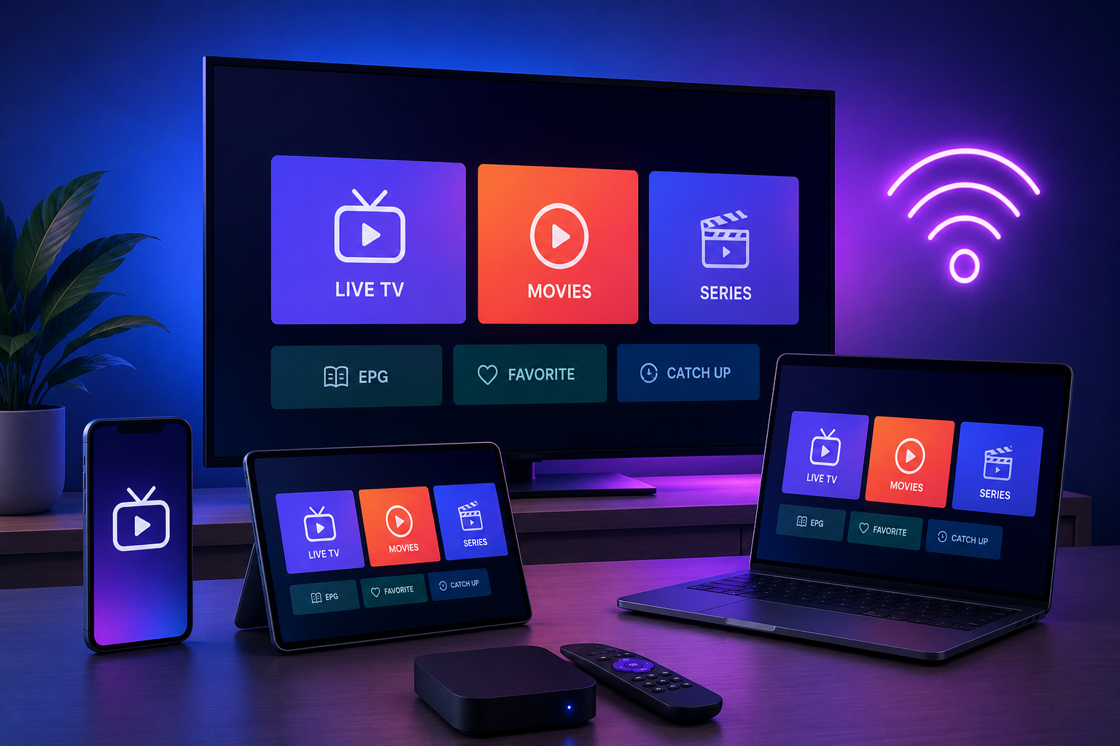
Once you've selected the right provider, your job isn't done. Follow these operational steps to avoid buffering and get the most value from your subscription.
- Use Ethernet not Wi-Fi. A hardwired Firestick or IPTV box eliminates packet loss and jitter. If you must use Wi-Fi, place the router within the same room and use 5 GHz.
- Optimize your device settings. On Firestick, enable Developer Options, set animation scale to 0.5x, and clear cache weekly. On Smart TVs, disable any auto power-saving features that interrupt streams.
- Configure your router's QoS. Prioritize your IPTV device's MAC address so the stream gets bandwidth first over background downloads and IoT devices.
- Set up EPG correctly. Use the provider's own XMLTV URL. For TiviMate, refresh on schedule to keep the guide accurate.
- Keep a backup provider for major events. Even premium services can suffer overload during the World Cup final. A second cheap monthly provider as a safety net is a smart strategy.
- Respect your connection speed. Set your streaming app's buffer size to high (or "multi"). This will load more data ahead of time and reduce buffering on variable connections.
Final Subscription Window:
Main Offer Today →Affiliate Disclosure: Clicking this secure link verified by our network supports our team through standard partnership terms at zero extra cost to your invoice.
Frequently Asked Questions
How does IPTV work on smart TV?
IPTV works on a smart TV through an installed IPTV app, such as IPTV Smarters Pro, TiviMate, or the provider's custom Android app. After installing the app, you enter the server URL, username, and password provided by your IPTV provider. The app then receives the streaming URL and plays the live channels or on-demand content via your internet connection. Most modern Samsung and LG TVs require an Android-based box or a compatible app since their native stores block sideloaded IPTV clients. You can also cast from a phone to the TV for a quick set-up.
How does IPTV work on Firestick?
On Firestick, IPTV works by installing a player app — typically IPTV Smarters Pro or TiviMate — from the Amazon App Store or by sideloading a trusted APK using the Downloader app. After the player is installed, you enter the M3U URL or Xtream Codes portal info supplied by your provider. The Firestick then receives streams over Wi-Fi or Ethernet. For the best experience, use the Firestick 4K Max and a wired connection, since IPTV streams can require sustained bandwidth that older Firestick models struggle to handle.
What is the best IPTV service for live sports in 2026?
The best IPTV service for live sports is one that offers 50fps or 60fps streams, comprehensive coverage of your preferred leagues, multi-language local feeds, and extra servers for PPV peaks. In 2026, premium providers in the $15–$25 price range tend to dominate sports, offering 4K feeds for major games and backup links for outages. Avoid bargain lists that advertise 40,000 channels but have no dedicated sports infrastructure. A good sports IPTV service will offer a trial lasting at least 24 hours, so you can test the quality during a live match before committing.
IPTV vs cable: which is better for the average household?
For the average household, cable is still the more stable, legally uncomplicated option, but IPTV wins on price and content variety. Traditional cable gives you a reliable signal, DVR, and no legal gray area — but it costs $80–$150 per month and locks you into a contract. IPTV offers live TV, sports, movies, and international channels for a fraction of that price, and you can cancel anytime. The catch is that quality depends on your internet connection and the provider's server maintenance. Households with weak internet below 25 Mbps should remain on cable or a licensed streaming service.
Is IPTV legal in the US in 2026?
IPTV technology itself is legal in the US, but the legality of a specific service depends entirely on whether it holds the broadcasting or retransmission rights for the content it streams. Licensed services like YouTube TV, Hulu Live, and Fubo are fully legal. Grey-market IPTV providers that offer premium sports channels without proper licensing violate copyright law, and subscribers can face account termination, service shutdown, or worse. To protect yourself, ask the provider for proof of licensing, use a legitimate plan, and avoid services that clearly operate outside the copyright framework.
Where can I buy a reliable IPTV subscription without getting scammed?
The safest way to buy a reliable IPTV subscription is to use a provider with transparent licensing, a 24-hour trial, 7-day refund guarantee, and payment processors that protect buyers. Look for services with a documented history on independent forums and provide a public troubleshooting portal. Start with one month to evaluate stability before purchasing longer terms. Avoid providers that only accept irreversible payments like crypto or CashApp, and never buy a lifetime subscription.
How do I fix IPTV buffering permanently?
IPTV buffering is usually caused by unreliable network paths, not your download speed. First, switch to a wired Ethernet connection. Then set your IPTV app's buffer size to "Large" or "Extra Large" in settings. Enable any hardware acceleration features in your player, and disable background apps that use bandwidth. If buffering persists, run a speed test to a server near your provider's location rather than your general internet speed. A VPN can actually help in some regions, but you need to know the provider's policy before enabling one. As a last step, reboot your router and clear the app cache.
Is IPTV worth it based on Reddit reviews in 2025–2026?
Reddit reviews from r/IPTV and r/StreamingSports in 2025–2026 are mixed and should be read with caution. The consensus is that IPTV is worth it only if you choose a provider with real infrastructure and reasonable expectations. Users consistently warn about providers paying for positive reviews, so you should cross-check recommendations on multiple threads. Practical success stories mention 4K sports, quick EPG updates, and helpful support as deal-makers, while the most upvoted negative stories involve sudden shutdowns. Treat Reddit as a starting point and always trial the service yourself.